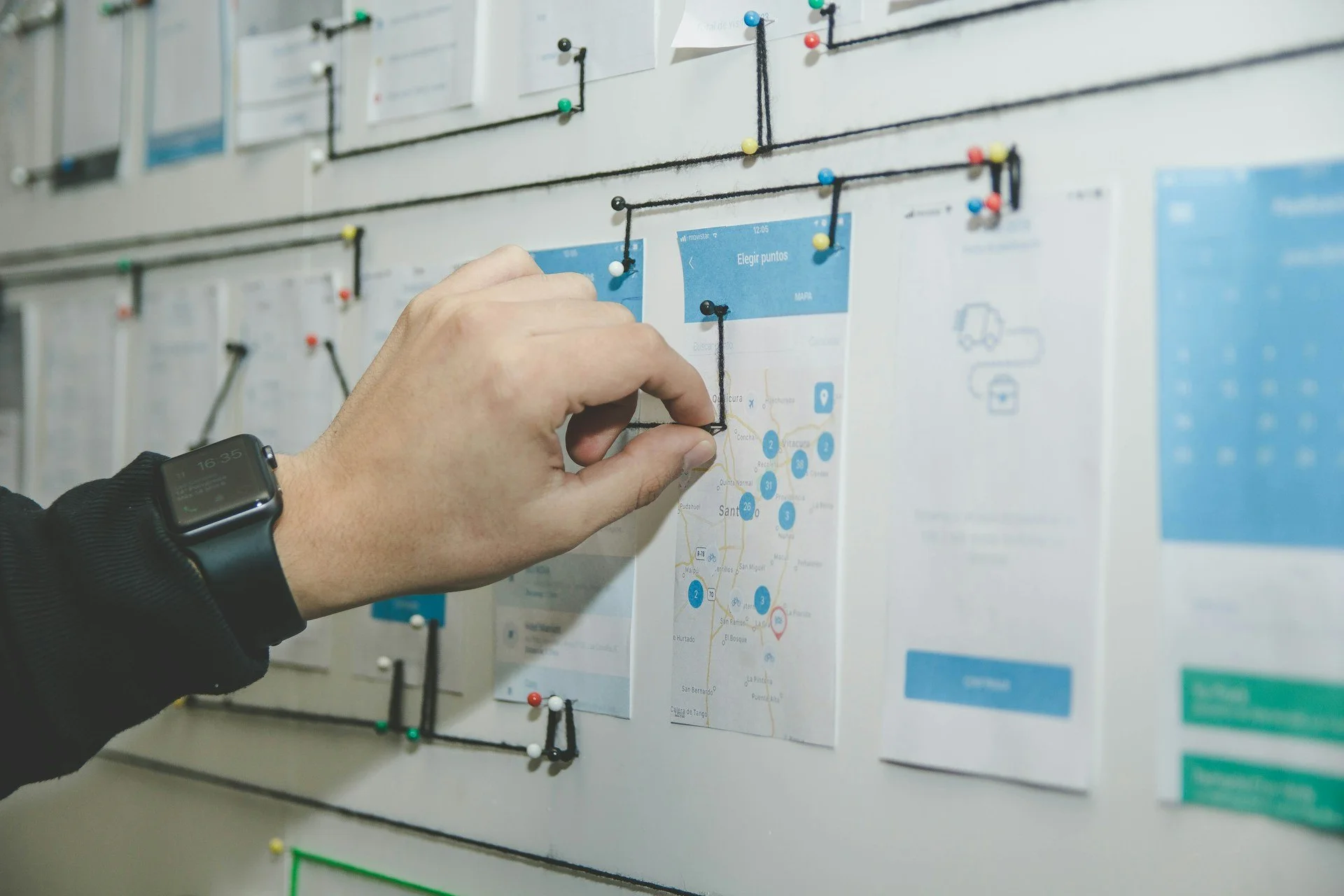
Fitness App Development Chicago: How Chitown Digital Experts Can Help You Succeed is about more than choosing a service or launching another digital asset. For fitness businesses, the real opportunity is to create an experience that helps the right people discover the business, understand its value, and take a useful next step. In a competitive market like Chicago, clarity and consistency matter: customers compare options quickly, and they expect businesses to communicate professionally across digital channels.
A practical fitness app development strategy starts with the audience, the business objective, and the resources available to support the work. It should connect creative decisions with customer needs and measurable outcomes rather than relying on trends alone. Chitown Digital Experts provides a place for businesses to explore digital solutions and plan a more coherent online presence. Visit chitowndigitalexperts.com or call 773-831-7419 or 1-888-245-9008 to discuss your goals.
What Fitness App Development Can Make Easier
A fitness app may help members book classes, follow training plans, track selected goals, manage memberships, or receive coaching information. Any health-related guidance should be appropriate to the service and clearly distinguish general wellness information from individualized professional advice.
Start With the User Problem
The strongest app projects begin with a specific problem to solve. Before deciding on screens or features, identify who will use the application, what they need to accomplish, and where the current process creates friction. Interviews, workflow reviews, competitor research, and feedback from staff or customers can help establish priorities.
A focused first release often performs better than an overloaded product. Separate essential features from ideas that can be tested later. Define the main user journeys, such as creating an account, finding information, making a booking, submitting a request, completing a payment, or receiving an update. Every feature should support a clear user need or business objective.
For fitness businesses, this is a practical part of a thoughtful fitness app development plan. The team should review the approach against its actual audience, operational capacity, and business goals instead of copying another company’s strategy without adjustment.
Plan the Core Features
Feature requirements depend on the industry, but they should be prioritized by value, complexity, risk, and frequency of use. Consider account management, search, notifications, scheduling, payments, messaging, saved preferences, reporting, and integrations only where they make sense. A feature list should explain what users can do and how the business will support it behind the scenes.
It is also important to define roles and permissions. Staff, administrators, customers, partners, and other users may need different access. Map the main workflows and decide which tasks need approval, which actions generate notifications, and what happens when a process fails. Clear requirements reduce misunderstandings during design and development.
For fitness businesses, this is a practical part of a thoughtful fitness app development plan. The team should review the approach against its actual audience, operational capacity, and business goals instead of copying another company’s strategy without adjustment.
Design for Ease of Use
App interfaces should help people complete tasks with minimal confusion. Use familiar navigation patterns, clear labels, readable text, predictable controls, and feedback when an action succeeds or needs attention. Reduce unnecessary steps, especially in forms and repeated workflows. Important functions should be easy to discover without crowding every screen.
Accessibility and device compatibility should be part of the design process. Consider text scaling, contrast, touch targets, error messages, and different screen sizes. Prototype key journeys before full implementation so users and stakeholders can identify confusing interactions early. A visually attractive app is valuable, but clarity and reliability are what encourage people to return.
For fitness businesses, this is a practical part of a thoughtful fitness app development plan. The team should review the approach against its actual audience, operational capacity, and business goals instead of copying another company’s strategy without adjustment.
Protect Information and Build Trust
Applications may handle personal, financial, location, health, educational, or business information, depending on the industry. Data collection should be limited to what the service needs, and users should understand why information is requested. Authentication, access control, secure data transmission, logging, backups, and appropriate retention policies should be planned with qualified technical professionals.
Industry-specific requirements may apply, particularly where regulated or sensitive information is involved. Healthcare, financial, and educational projects should receive careful privacy and security review before launch. Avoid promising compliance simply because a feature has been implemented. Requirements depend on the use case, the data involved, and the organizations responsible for operating the application.
For fitness businesses, this is a practical part of a thoughtful fitness app development plan. The team should review the approach against its actual audience, operational capacity, and business goals instead of copying another company’s strategy without adjustment.
Test Before and After Launch
Testing should cover more than whether each button works. Test complete user journeys, different devices, slow or interrupted connections, form errors, permissions, notifications, and integrations. Review performance and make sure the app gives useful feedback when something goes wrong. User acceptance testing can reveal problems that the project team may overlook because it already understands the interface.
Launch should be followed by monitoring and a process for collecting feedback. Analytics can show where users abandon a journey, while support requests can identify confusing screens or missing functionality. Plan for bug fixes, platform updates, security maintenance, and future improvements. An app is an ongoing product, not a one-time design file.
For fitness businesses, this is a practical part of a thoughtful fitness app development plan. The team should review the approach against its actual audience, operational capacity, and business goals instead of copying another company’s strategy without adjustment.
Connect the App With Marketing
An app needs a clear reason for the intended audience to discover and keep using it. The website should explain the app’s value, show relevant features, and link to the appropriate download or access point. Social media, email, existing customer communications, and partnerships can introduce the app to audiences who are likely to benefit from it.
Marketing should focus on real utility rather than download numbers alone. Onboarding should quickly show users how to complete the app’s main task. Notifications should be relevant and controllable, and promotional messages should respect user preferences. Track activation, repeat usage, task completion, retention, and other meaningful outcomes to understand whether the app is delivering value.
For fitness businesses, this is a practical part of a thoughtful fitness app development plan. The team should review the approach against its actual audience, operational capacity, and business goals instead of copying another company’s strategy without adjustment.
Plan a Realistic First Release
Prioritize the features required to deliver the main user benefit. Put optional enhancements into a later roadmap and validate them through feedback or usage data. This approach can help teams control scope and learn from real users before committing to more complex functionality. For fitness businesses, the next step is to choose improvements that support the main objective of the fitness app development project and can be maintained responsibly.
Choose Technology With Maintenance in Mind
Technology decisions should account for budget, integrations, security, expected usage, team capabilities, and long-term support. Discuss ownership, release management, platform updates, monitoring, and ongoing maintenance before development begins. A clear maintenance plan helps prevent an app from becoming difficult to support after launch. For fitness businesses, the next step is to choose improvements that support the main objective of the fitness app development project and can be maintained responsibly.
How Chitown Digital Experts Can Help
Businesses exploring fitness app development in Chicago can visit chitowndigitalexperts.com to learn more about Chitown Digital Experts and discuss their digital goals. A productive initial conversation should cover the intended audience, current challenges, desired outcomes, timeline, budget, and any technical or content requirements. These details help identify a practical scope instead of assuming every business needs the same solution.
Prepare examples of what is working and what needs improvement, along with existing brand assets, service information, and any relevant analytics or customer feedback. Clear preparation makes it easier to prioritize work and decide what should be addressed first. To discuss a project, visit chitowndigitalexperts.com or call 773-831-7419 or 1-888-245-9008.
Conclusion
Successful fitness app development is built around the audience, not just the platform or the latest trend. For fitness businesses, a clear strategy, consistent execution, useful content, reliable experiences, and ongoing measurement create a stronger foundation for sustainable growth. Results take time and depend on competition, resources, implementation, and customer response; no responsible provider can guarantee a particular search ranking or marketing outcome. Start with the customer problem, set measurable goals, and improve the approach as evidence becomes available. Chitown Digital Experts is available at chitowndigitalexperts.com, 773-831-7419, and 1-888-245-9008.
A Note on Sustainable Results
Sustainable results come from making choices that can be maintained after the initial project is complete. Set realistic expectations, assign responsibility for ongoing work, and make sure the people managing the solution understand how to update it. Review the experience periodically with input from customers, staff, and performance data. Avoid making changes solely because a competitor has adopted a new feature or a platform has introduced a trend. The most useful improvement is the one that solves a demonstrated problem, supports the business objective, and can be maintained without creating unnecessary complexity.
Turn Insights Into Action
A review is only useful when it leads to a decision. At regular intervals, identify what is working, what is underperforming, and what needs more evidence. Choose a small number of priorities, assign an owner, and define how progress will be evaluated. This makes the strategy easier to manage and reduces the temptation to chase every new idea. Over time, a documented cycle of planning, execution, measurement, and refinement helps the business build institutional knowledge and make more confident decisions.